Before contacting the seller
Use the guide to assess the listing, market logic and available evidence before investing time in the opportunity.
Learn how to screen the watch, the seller, the documents and the story behind the listing—so you can recognize risk earlier, ask better questions and know when to walk away.
A practical 55-page PDF guide with eight structured chapters and four field tools to support better-informed pre-owned watch purchases.
Instant PDF download · One-time payment · Use it for every watch you evaluate
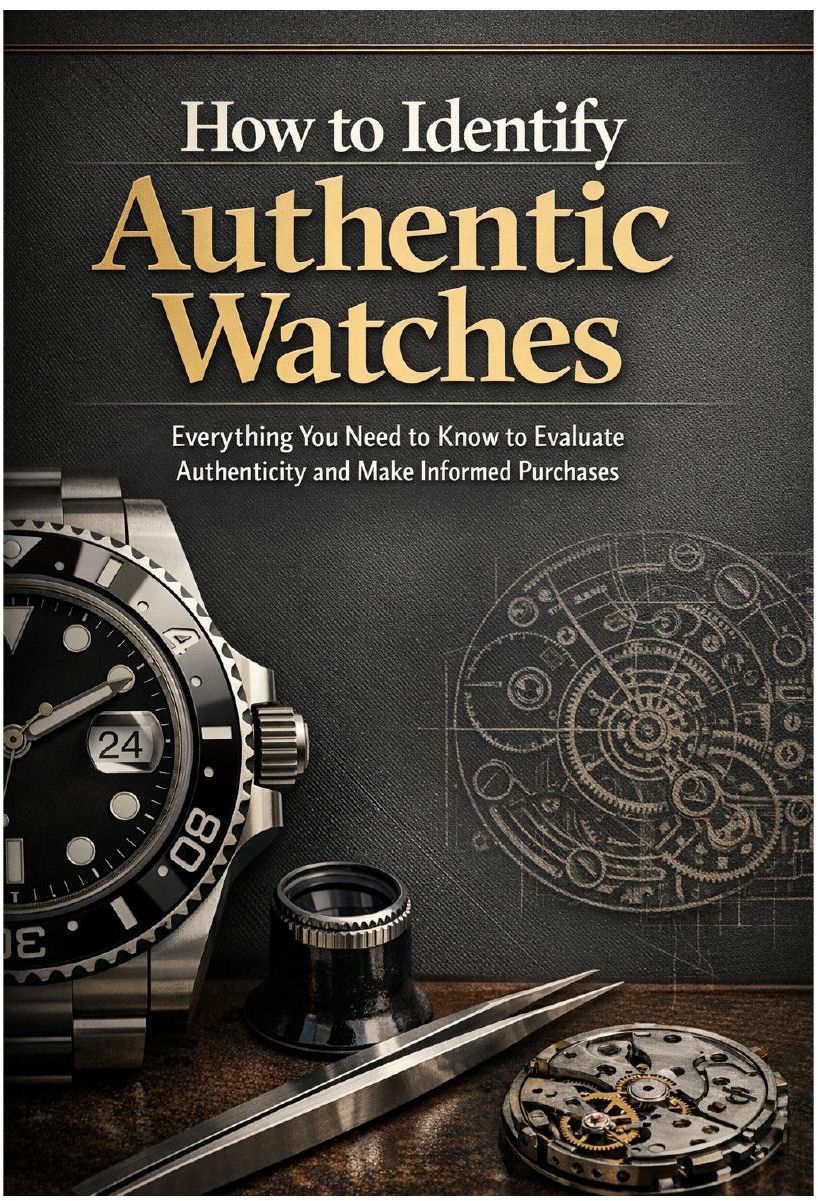


Actual pages from the guide
A convincing listing can include professional photographs, matching papers, a knowledgeable seller and even genuine components. None of these elements, on their own, proves that the watch is authentic, correctly configured or accurately represented.
This guide gives you a structured way to examine the evidence, challenge reassuring assumptions and identify inconsistencies before committing your money.
Genuine papers can belong to the wrong watch.
A genuine movement does not guarantee a correct watch.
A reputable seller can still overlook important inconsistencies.
The aim is better decision-making before payment — not the promise of recognizing every counterfeit with absolute certainty.
Focus on the details that deserve attention instead of searching without a clear process.
Request the specific photographs, documents and information that can reveal inconsistencies.
Identify warning signs before deposits, transfers or irreversible decisions.
Separate normal uncertainty from combinations of red flags that should stop the transaction.
Return to the guide whenever you evaluate another pre-owned watch.
Understand when the remaining risk justifies professional inspection or authentication.
No vague promises. Explore selected pages from the actual 55-page guide before you buy.
Previews are extracts from the actual PDF. Full pages are available in the guide.
Instant PDF download · One-time payment · Use it again for future purchases
The guide moves from market logic to physical evidence, then to documentation, seller assessment and a final pre-purchase decision protocol.
Price logic, urgency, emotional bias and listing red flags.
Original, partially original, service parts and frankenwatches.
Printing, fonts, spacing, lume, refinishing and aftermarket parts.
Geometry, polishing, finishing, engravings and serials.
Caliber identity, cloning, swapping and service changes.
Serial matching, warranty cards, full sets and provenance claims.
Verification, reputation, returns and behavioral red flags.
A staged decision process, risk levels and the final pause rule.
Pages 15 · 17 · 28 — tap to enlarge
60-Second Decision Protocol
Photo Request List
Risk Triage Matrix
Questions Worth Asking in Writing
The guide concludes with four practical references designed to be reopened while evaluating a listing, requesting evidence and preparing to pay.

Establish the correct reference, configuration and realistic market range. Save the listing before it changes.
Request the complete photo set, obtain written answers, confirm identity, payment protection and return terms.
Inspect promptly within the return window. Compare the received watch with the listing and arrange professional inspection if risk remains.
This is not a book to finish and forget. It is a field manual to revisit at the moments when purchasing decisions become difficult.
Each option serves a different purpose. Online research can be useful but fragmented. Professional authentication can provide a deeper technical assessment but may not be practical for every listing. This guide gives you an immediate, affordable and reusable process for screening opportunities before you commit money or pay for further inspection.
The guide gives you something the alternatives do not: an immediate process you can personally apply before every transaction.
Immediate access
$34 one-time cost
Greater buyer autonomy
Reusable for future purchases
This guide does not replace a qualified watchmaker or professional authentication when definitive verification is required. It helps you identify risk earlier, avoid wasting time on questionable listings and understand when expert inspection is worth pursuing.
Instant PDF download · One-time payment · Use it again for future purchases
Use the guide to assess the listing, market logic and available evidence before investing time in the opportunity.
Use the Photo Request List and written questions to request precise, verifiable information.
Use the 60-Second Decision Protocol and Risk Triage Matrix to conduct one final assessment.
Identify the uncertainties that remain and decide whether the watch warrants expert inspection.
Examples of how the guide can be used. These are not customer testimonials.
Better preparation does not remove every risk. It makes expensive warning signs harder to miss.

Use eight structured stages and four practical field tools to examine the watch, the seller and the documentation before committing to your next purchase.
Immediate access. One-time cost. A process you can use for every watch you evaluate.
Instant PDF download · One-time payment · Read on any device